

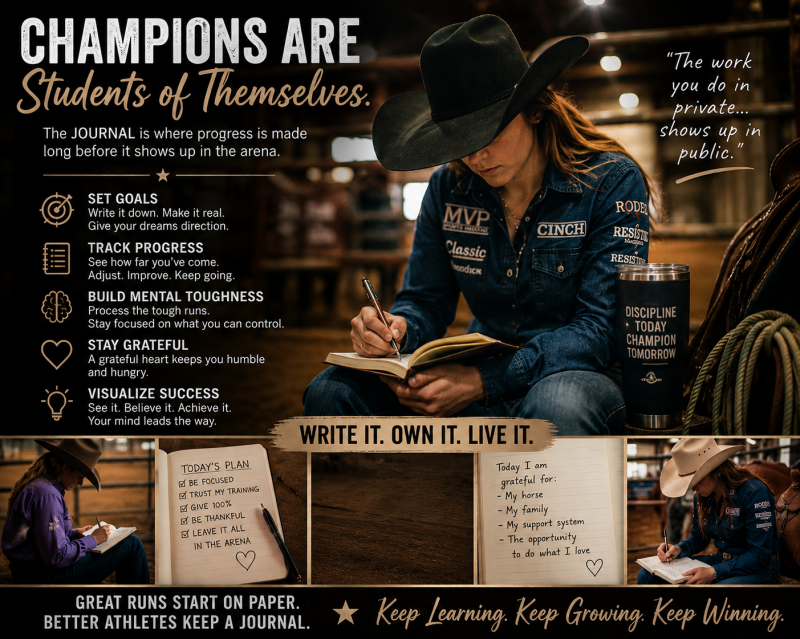
Journaling- Why is it important?
In this weeks article, we will discuss the power of writing. This is a tool I’ve used as both an athlete and coach since 2017. Throughout my years of journaling, I’ve found it to be a safe space to write my feelings, goals, and daily tasks down. I always encourage each athlete I help to practice this method in order to discover themselves. I have attached pictures and examples of how I write in my own personal book.
Journaling was introduced to me my freshmen year of college by my coach Sean Amestoy at Wharton County Jr College. This journal was referred to as a “Pride” journal where everyone on the team was encouraged to write down every piece of our day. At first I found this to be just another task that I had to complete throughout the day. However, as time went on I realized that this would become the ultimate receipt book of my life. Whenever I would feel doubtful or unsure of if I was prepared or not for a rodeo or test, I looked back in this book and could physically see how far I’d come and know that I was ready.
As we mature and grow, it is human nature for our mind to forget some things we’ve accomplished. Same goes for rodeo, our wins come and go quickly, but it is only you who will remember what you went through to get that win. So why is it important to write everything down?
Why Athletes Journal:
Mental Preparation
While physical training hones the body, mental preparation sharpens the mind, helping athletes perform under pressure. Journaling plays a crucial role in this process. By putting pen to paper, Athletes can visualize their success, mentally rehearsing each movement, turn, and strategy before they ever step onto the field or into the arena. This practice allows them to create a mental blueprint of their desired performance, building confidence and reducing anxiety. When it’s time to compete, they’ve already seen themselves succeed countless times in their minds, thanks to the detailed scenarios they’ve crafted in their journals.
Goal Setting
For Athletes, goal setting is not just about winning titles—it’s about setting a clear path to success, with each step carefully planned and documented. Journaling allows athletes to break down their long-term goals into manageable milestones, tracking their progress and adjusting their strategies as needed. By regularly reviewing their goals, athletes ensure they stay focused and motivated, even when faced with setbacks. The journal becomes a roadmap, guiding them through the highs and lows of their training, helping them stay on course toward their ultimate achievements.
Visualization
Through journaling, athletes vividly imagine their success, crafting detailed mental images of their performance. By writing down these visualizations, they reinforce their belief in their ability to achieve their goals. This process not only helps them mentally rehearse their actions but also solidifies their commitment to their aspirations, making their dreams feel tangible and within reach.
Emotional Management
The pressure of competing at the highest level can be overwhelming, and managing emotions is a critical part of an athletes success. Journaling provides a private space where athletes can process their feelings, whether they’re dealing with the disappointment of a poor performance, the stress of intense competition, or the joy of a personal best. By reflecting on their experiences, athletes can gain perspective, develop resilience, and maintain a positive mindset. This emotional clarity not only helps them cope with the demands of their sport but also allows them to approach each challenge with a balanced and focused mind.



How You Can Apply These Journaling Practices
While the life of a rodeo athlete may seem out of the ordinary for people looking from the outside, our training is no less than what an Olympian athlete trains for. Countless studies have shown that journaling increases success in athletes professional and personal life. By setting clear goals, reflecting on progress, and managing emotions through journaling, you can cultivate the same mental strength and resilience that drives elite athletes to greatness. Here’s how you can start incorporating these practices into your own routine:
Set Clear Goals
- Create a dedicated section in your journal for setting and tracking your goals. By writing down your goals, you can celebrate small victories along the way to stay motivated and recognize your progress.
Reflect Regularly
- At the end of each day or week, write a brief reflection on your achievements and any challenges you faced. Use prompts like “What went well this week ?” and “What could I improve on next week?” to help you adjust your goals and strategies as needed, keeping your plans dynamic and responsive.
Explore Your Emotions:
- Use your journal as a safe space to explore your feelings without judgement. Journaling about your feelings allows you to write freely and honestly about what you’re experiencing, allowing yourself to process emotions in a healthy way.
- As young women, we experience a lot of unsure emotions. This is a great way to work through these emotions!
Reframe Setbacks
- When encountering setbacks or failures as an athlete , use your journal to reframe the situation. Identify lessons learned and brainstorm new approaches to overcome obstacles.
Practice Gratitude
- Use this journal to write things down that you are thankful for.
- Shift your focus from the negative to positive by keeping a gratitude section. Regularly listing things that you’re thankful for to cultivate a more optimistic mindset.
Author: Mersadie Martin
Journal Prompts to Use
Here are some examples of prompts and answers to use to write in your personal journal. I encourage you to personalize your journal, bring it to practice, and make it a daily part of your routine!
Add comment
Comments